



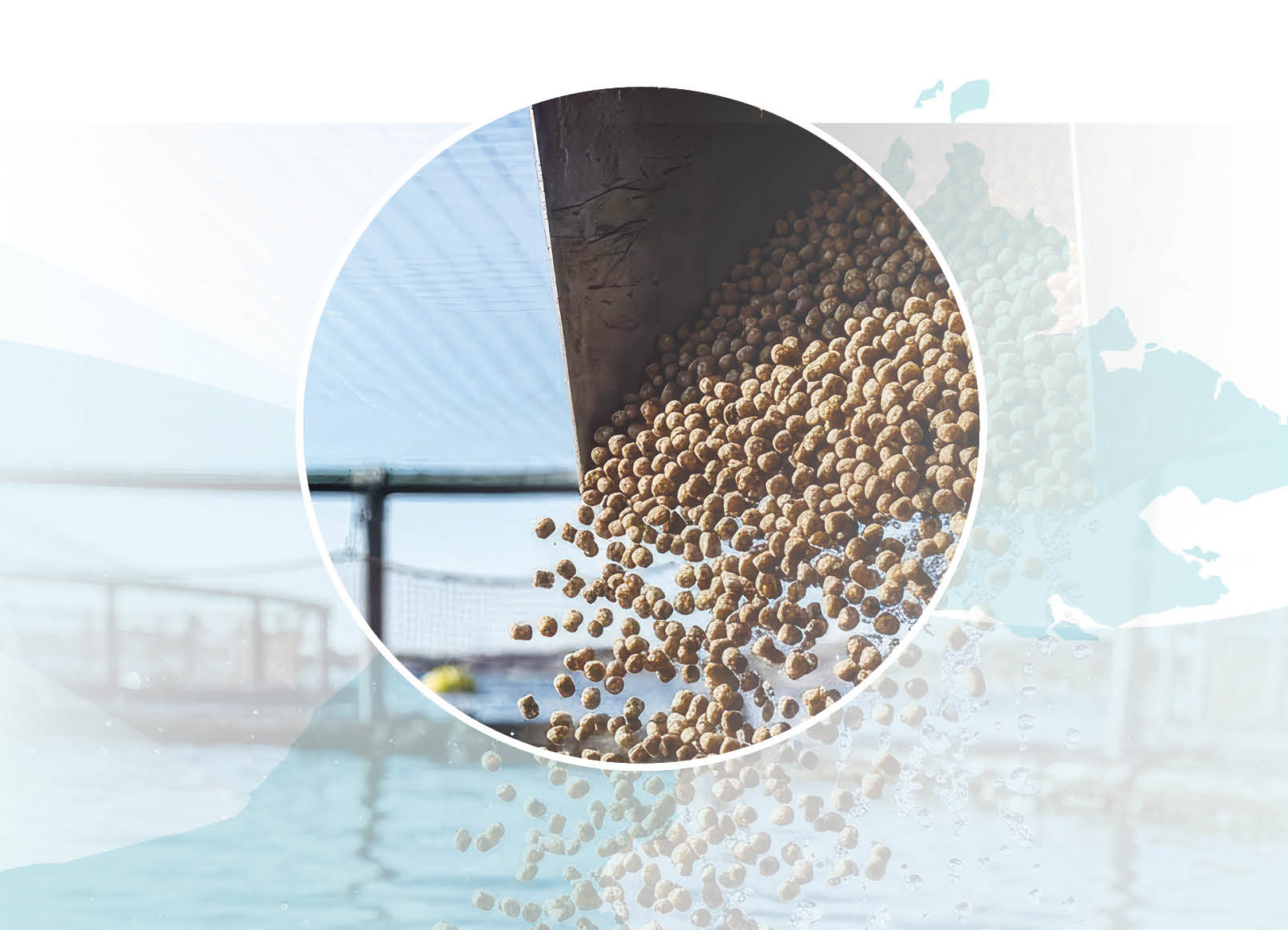
Aquafeed comprises one or more artificial and/or natural feedstuffs in the form of pellets or extruded bits for fish, crustaceans, and mollusks. The report focuses only on commercial aquafeed, while farm-made aquafeed has been excluded from the study scope. The global demand for seafood continues to rise, driven by population growth, increasing disposable incomes, and changing dietary preferences. Consequently, aquaculture, including the farming of fish and other aquatic species or organisms is expanding to meet the rising demand for seafood. Aquafeed plays a vital role in supporting the development and growth of farmed fish, as it provides essential nutrients and promotes optimal health. The growing demand for seafood, therefore, fuels the demand for aquafeed.
Fish is the primary consumer of aquafeed ingredients compared to other species. This is due to its affordability and high level of digestibility, particularly in coastal regions. However, overfishing and pollution have significantly decreased the availability of fish in natural waters. As a result, various methods are being employed to boost production. One such method involves improving aquaculture management through digitalization. During the last two decades, aquaculture in Africa has moved away from subsistence fish farming to commercial production and profit-oriented aquaculture. This transition requires technical support and real-time provision of information, inputs, and services. To meet these needs, Rhodes University in South Africa has developed Buna Africa, an online platform designed to support the development and management of the aquaculture sector in Africa. Through the platform, farmers can submit production data to the government, informing policy and aiding in the formulation of management and development plans. Additionally, the FAO is supporting the implementation of Buna Africa in Rwanda and Uganda, offering farmers technical support and services to increase production and efficiency. Buna Africa also serves as an entry point for service providers in the aquaculture sector to connect with fish farmers and government services, tracking production data to inform policy and management decisions.
According to MarketsandMarkets The aquafeed market is estimated at USD 67.71 billion in 2026 and is projected to reach USD 97.12 billion by 2031, at a CAGR of 7.5% from 2026 to 2031.The growth of the aqua-feed market is attributed to a growing demand for processed seafood products, further resulting in the growth of the seafood trade.
The thriving aquaculture industry has gradually paved the way for the increase in organized production of seafood products, which is, in turn, boosting the aquaculture industry. According to FAO, the world aquaculture production reached a record 130.9 million tons in 2022, an 8.1-million-ton increase from 2020. With a farm-gate value of USD 312.8 billion, up by USD 34.2 billion, this surge highlights the growing demand for aquafeed, driven by expanded aquaculture operations and increased market value, presenting significant growth opportunities in the aquafeed sector. This included various aquatic animals, such as finfish, crustaceans, and mollusks, as well as aquatic plants like algae. Notably, in 2022, inland aquaculture produced 59.1 million tonnes of aquatic animals, with finfish (89.7%) and crustaceans (8.7%) representing 62.6% of global aquaculture production.
According to the same source, in 2022, the top 10 aquaculture-producing countries accounted for 87.9% of global production, with China leading at 57.8%. India (7.1%), Indonesia (6.9%), and Vietnam (5.2%) followed, contributing significantly to global output. Bangladesh (3.4%), Egypt (2.1%), Norway (1.5%), Chile (1.4%), Myanmar (1.3%), and the Philippines (1.2%) also made notable contributions. These nations dominate the global aquaculture industry, reflecting their critical role in meeting the rising demand for aquatic products.
This rise in aquaculture output can be attributed to several factors. Firstly, the growing global demand for seafood has put pressure on traditional fishing practices, leading to the exploration of alternative means to meet consumer needs. Aquaculture has emerged as a viable solution to supplement wild-caught fish and shellfish, ensuring a sustainable supply of seafood. Furthermore, technological advancements have played a crucial role in boosting aquaculture production. Innovations in fish feed formulations, water quality management systems, and disease prevention strategies have led to improved efficiency and increased yields. Moreover, the Activ development of genetically improved fish breeds has enhanced growth rates and disease resistance, further contributing to the expansion Go to of the industry.
The trade of fish and aquaculture products plays an integral role in boosting fish consumption and achieving a global market for aquaculture products by connecting various international suppliers and manufacturers. Fish and fishery products are a part of one of the most traded sectors of the global food sector. The trade of these products has increased significantly in recent years, driven by the rise in fishery production and high demand, with the fisheries growing due to a progressively globalized environment. The significant growth in fisheries and aquaculture production has resulted in the increased consumption of diversified as well as nutritious food.
According to the OECD-FAO Agricultural Outlook 2021-2030, aquaculture will play a significant role in the growth of the international fish trade, particularly with high-value species like salmon, seabass, seabream, shrimp, prawns, as well as lower-value species such as tilapia, catfish, and carps. By 2030, world exports of food fish are expected to reach 44 million metric tons (live weight equivalent), excluding intra-EU trade, representing a rise of 5.3% over the next decade.
Asian countries, which are key players in fishery production, will account for 47% of global food fish exports by 2030. While Asia will still contribute to export growth, the major increase is expected to come from Europe, particularly from countries such as Russia and Chile, with projected growth rates of 33% and 40%, respectively. China, despite experiencing slower growth in food and fish exports, will remain the leading global exporter, representing 18% of world trade by 2030. Vietnam is anticipated to have the largest growth in fish exports, accounting for 47% of the additional export volume. However, lower exports from India and Indonesia may offset this growth.
According to the OECD-FAO Agricultural Outlook 2021-2030, considering other fishery products, exports of fish meal are expected to increase by 8.6% by 2030, with developing countries being the main exporters and importers. Peru will remain the leading exporter of fish meal, followed by the EU, the US, and Thailand. China will continue to be the largest fish meal importer with 51% share of world fish meal imports by 2030, satisfying the needs of its aquaculture and pig industries. Fish oil exports are projected to increase by 5.2% between 2020 and 2030, with Peru and the EU as the main exporters and Norway and the EU as the main importers. Fish oil is primarily utilized as ivat supplementary feed in the salmon industry and as a food supplement for human consumption.
Advancements in seafood processing and transportation technologies have improved the efficiency of the seafood supply chain. Modern processing techniques, such as flash freezing and vacuum packaging, have extended the shelf life of seafood products, ensuring that they retain their freshness, flavor, and nutritional value during transit. These methods reduce spoilage and waste, allowing for a greater volume of seafood to reach markets without degradation in quality. Additionally, the development of specialized cold chain logistics has played a crucial role in maintaining the optimal temperature conditions required for seafood during transportation.
Thus, the aquaculture market is expected to play a crucial role in driving the growth of the global fish and fish products trade, with both high-value and lower-value species contributing to international trade. While Asia will maintain its prominence in fishery production and exports, countries such as Russia and Chile are projected to experience substantial export growth. Developed economies will continue to rely heavily on fish imports, while developing countries, influenced by Asia, will have a relatively lower share of food fish imports.
www.marketsandmarkets.com