


Today, India ranks second in the world in the production of edible eggs, and is also one of the five largest producers of broilers.
What should Russian poultry farmers learn from their Indian colleagues? Why, in today’s conditions, should we not limit the range of suppliers and technologies to familiar countries and brands? Chairman of the International Poultry Forum Ivan Shabaev spoke about this in an exclusive interview with Oksana Mikheeva, General Director of the information and analytical agency EMEAT.
— Ivan, you recently returned from India, where the poultry industry is showing rapid growth and is actively modernizing. Today, India ranks second in the world in the production of edible eggs and is also one of the five largest producers of broilers. What, in your opinion, made such a technological breakthrough possible?
— According to my feelings, Indian poultry farming is really at the stage of active development. This can be seen not only in statistics, but also in the mood of the business itself. Companies are building new buildings, expanding the parent stock, investing in incubation, equipment and their own genetics. There is a sense of confidence that the market will continue to grow.
The main driver is huge domestic demand. As incomes rise, more and more people can afford not only plant-based foods, but also animal protein. At the same time, eating habits are gradually changing: the proportion of the population consuming eggs, meat and fish is increasing.
— To what extent did what you saw correspond to our expectations and our ideas about the Indian agricultural sector?
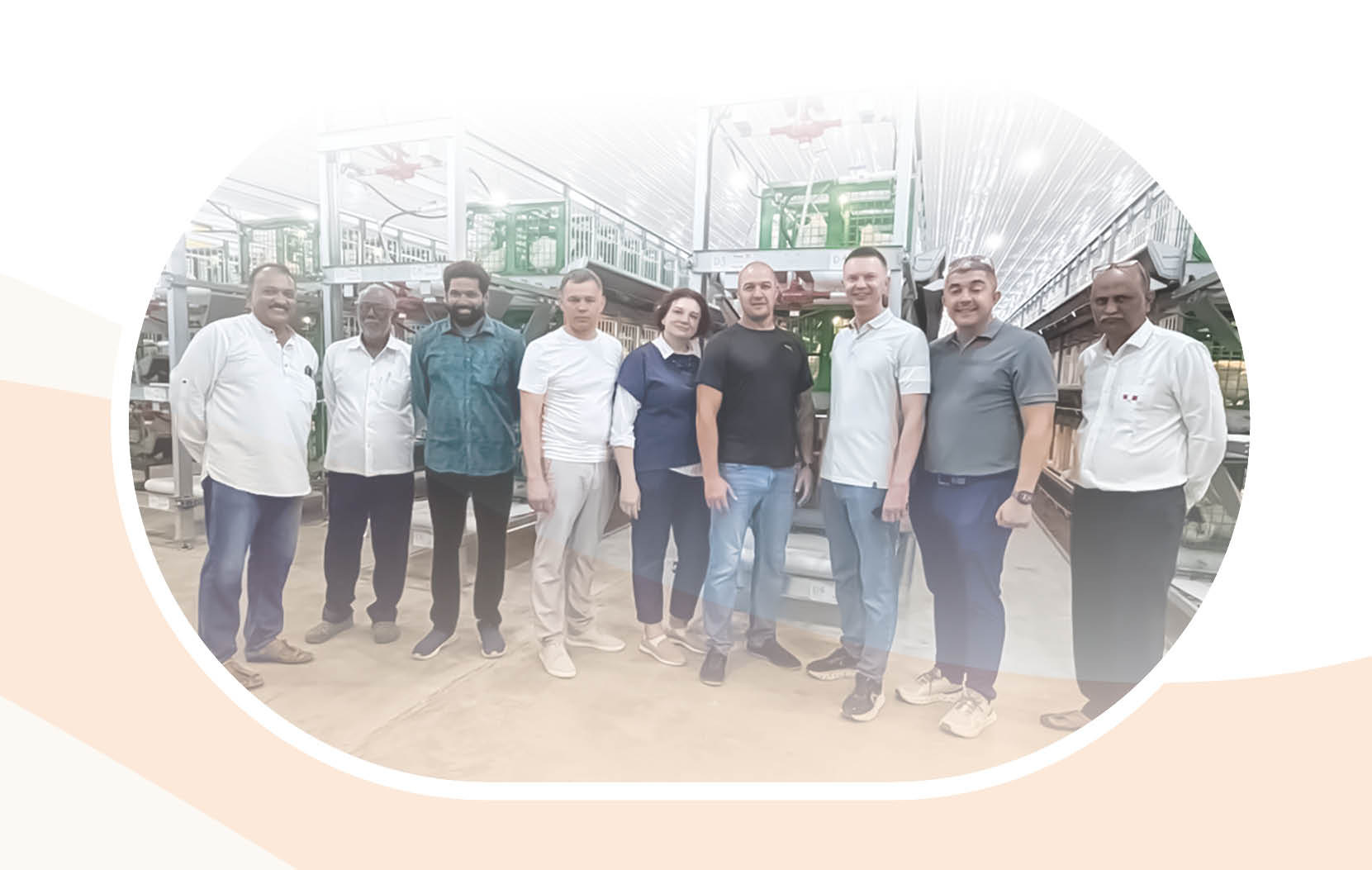
— I was impressed not so much by the growth percentages themselves, but by the depth of the changes. India is gradually moving from a predominantly farm model to industrial poultry farming. Previously, a significant part of the poultry was raised in open poultry houses, and sometimes almost in ordinary barns. Today, more and more new projects are being created in the form of closed buildings with a controlled microclimate, a modern feeding and watering system, high-quality bedding and a higher planting density.
If we talk about what diverged from my expectations, then I probably did not expect to see such a developed in-house production of equipment, genetics, feed additives, veterinary drugs and vaccines. India turned out to be not just a large consumer of technology, but a full-fledged manufacturing and engineering center.
Modern poultry houses with controlled microclimate
— Let’s talk about technological solutions. In India, where manual labor is still high, the introduction of advanced technologies such as climate control, IoT sensors, smart feeding systems and inspection robots is increasingly being reported. Is this a mass trend or individual projects of the largest agricultural holdings?
— Here I would separate real massive changes and individual experimental technologies. Of course, India has modern digital solutions, sensors and automation. But I wouldn’t say that the massive Indian trend today is robots, artificial intelligence or a completely digital poultry farm.
The main technological revolution I’ve seen is much more practical. This is a transition from open poultry houses to modern closed buildings with a controlled microclimate. This is a huge step for India. The closed housing allows you to control temperature, air exchange, air speed, humidity, lighting and planting density. As a result, the enterprise receives more stable growing performance and less dependence on heat and seasonal fluctuations.
These are the types of projects that are being actively built today. Indian companies have learned to create high-quality housing, ventilation, feeding, watering systems, floor and cage equipment. In my opinion, it is now more important for them to reliably mechanize the main production processes and quickly increase volumes than to immediately switch to expensive robotization.
The absence of sanctions restrictions is an important factor
— Do Indian poultry farmers use European, Chinese or their own equipment? How dependent is the industry on imports?
— India has a full-fledged poultry equipment industry of its own. According to our estimates, dozens of companies produce cage systems, equipment for outdoor cultivation, feeders, drinkers, microclimate systems, incubators and other solutions.
Moreover, the Indian market is very heterogeneous. There are affordable mid-level solutions, there is equipment of low quality, but there are also premium manufacturers that are no longer inferior to European companies. In certain areas, especially in equipment for cage housing of parent flocks, some Indian solutions, in my opinion, are already superior to traditional European analogues.
It is very important that India has its own engineering school. Companies don’t just copy equipment, but develop it, test it in harsh climatic conditions and constantly improve it.
— Do you think Indian companies can become suppliers of poultry farming equipment for Russia?
— India may well become a major supplier of equipment to Russia. We are already seeing interest from Russian poultry farms in Indian cage and floor systems, incubators and specialized solutions. Against the backdrop of rising costs of European equipment and logistics restrictions, India is becoming a very interesting alternative.
At the same time, you need to choose a supplier carefully. As in any large manufacturing country, there are companies of different levels. It is necessary to evaluate references, the quality of metal and components, engineering calculations, automation, availability of service and the ability of the manufacturer to adapt the project to the Russian climate.
In addition to the quality of the equipment, there is another important factor. India has not joined the sanctions restrictions against Russia and maintains active trade relations with our country. This is very important for business. It is not enough to find good equipment – you must be able to formally conclude a contract, make payments, organize delivery and further service. In practice, we see that Indian companies are interested in the Russian market and are ready to work with Russian customers in the long term.
What Indian experience would be useful in Russia?
— If we analyze the results of your trip: what could be useful for Russian manufacturers, especially given the labor shortage?
— More pragmatic attitude towards technology. Indian companies look very closely at the economics of every decision. They are interested not just in brand awareness, but in how much equipment is needed, how many cases it replaces, how many people it frees up, and how quickly it will pay for itself.
Combination of traditional approach and advanced competencies
— If we talk about the general impression, what surprised you most about Indian poultry farming?
“Perhaps what surprised me most was the combination of the traditional market and modern production competencies.
On the one hand, a significant part of broiler is still sold live in traditional markets. The buyer can choose a bird, after which it is slaughtered directly at the point of sale. Industrial slaughter and processing are developing, but the live poultry sales model still has a very large share. On the other hand, the same companies build modern closed housing, produce complex cage equipment, develop genetics, their own pure lines and ancestral herds.
Promising and mutually beneficial partnership
— If you formulate one main conclusion or advice for the managers of Russian poultry farms based on the results of the trip, what would it be?
— The main advice is not to limit the range of suppliers and technologies to familiar countries and brands. For decades we have focused primarily on Europe and the United States. Now many people automatically look only at China. But the world is much wider. India already has serious engineering, veterinary and genetic competence and can offer Russia solutions that are well adapted to difficult conditions and at the same time economically competitive.
When choosing equipment, you need to evaluate not the country of origin or brand awareness, but specific indicators: the quality of metal and components, reliability of automation, technological results at existing enterprises, cost of ownership, service and the willingness of the manufacturer to adapt the project to the client.
And the second conclusion is that today it is more important not just to increase production, but to increase efficiency. The Russian market is at a more mature stage, so our investments should be aimed at reducing costs, automation, reducing personnel requirements, increasing product safety and quality.
— Is there anything that Indian manufacturers could learn from us? What have Russian poultry farmers succeeded in?
– Undoubtedly. Russian industrial poultry farming is at a very high technological level. Indians are interested in our experience of creating large vertically integrated enterprises, managing production in closed buildings, operating in cold climates and ensuring biosecurity at large sites.
Russia has much more developed industrial slaughter, deep processing, production of chilled and finished products, packaging, logistics and work with large retail chains. The Indian market will gradually shift from live poultry to chilled poultry, processing and modern retail. Here, Russian companies have practical knowledge that they can share.
In addition, our enterprises are able to work with a large array of production data, build centralized management and standardize processes at several sites. For the fast-growing and still quite fragmented Indian industry, this experience can also be useful.
— Should we expect representatives of Indian associations, equipment manufacturers and technology companies?
– Yes. Indian colleagues have been participating in the events of the International Poultry Forum and Russian industry exhibitions for three years now. We plan to continue to invite representatives of Indian associations, equipment manufacturers, genetics and veterinary companies. It is important that Russian poultry farmers can communicate with them directly, ask technical questions and learn from the experience of specific enterprises.
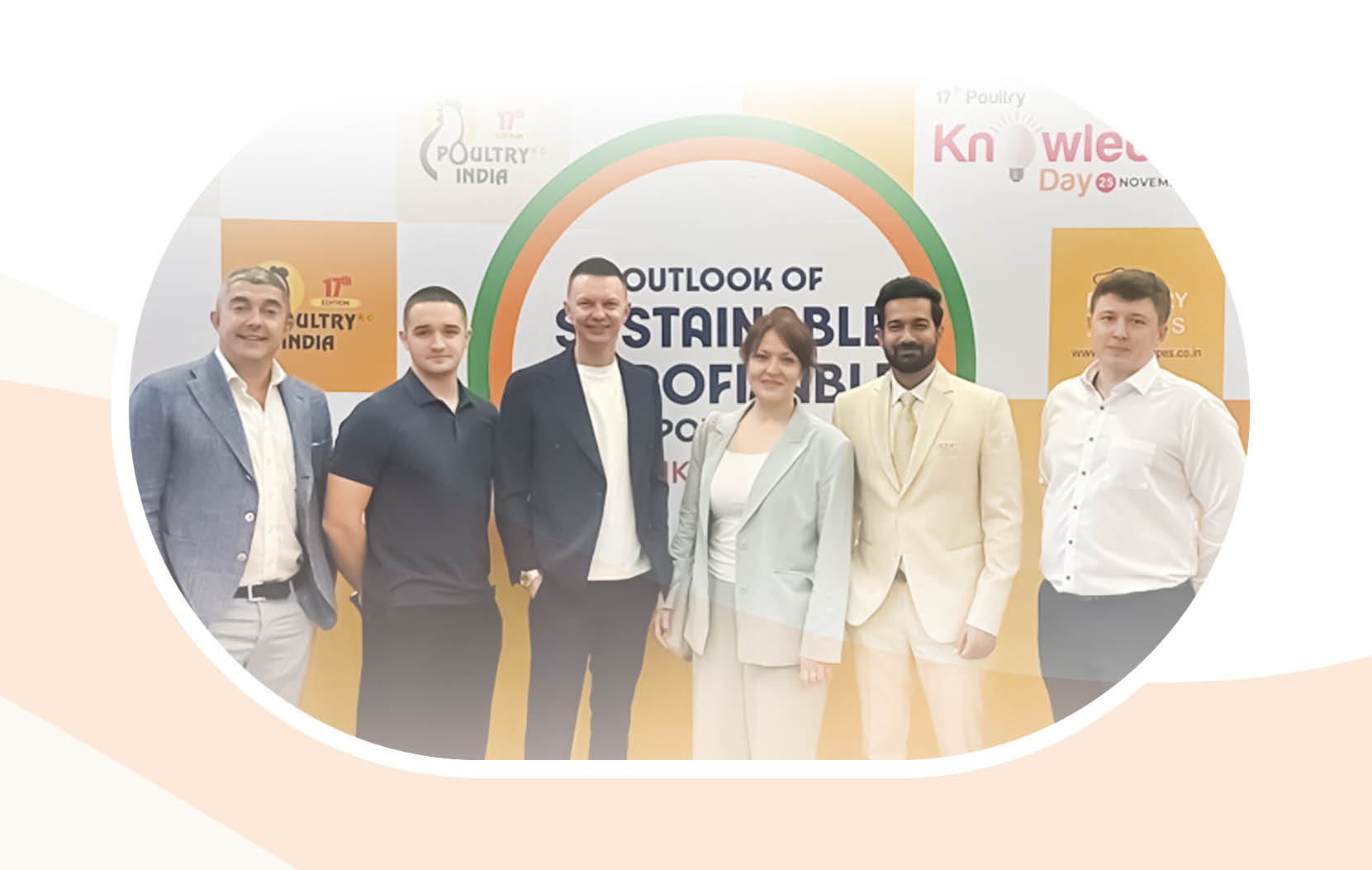
We also plan to organize a trip for the Russian delegation to the Poultry India exhibition in Hyderabad in November 2026. This is one of the largest specialized poultry exhibitions in the world. Almost the entire chain is represented there: equipment, genetics, feeding, veterinary medicine, incubation, processing and automation.
Poultry India 2026 will be held from November 25-27 at HITEX in Hyderabad, followed by the Knowledge Day technical congress on November 24.
Source: www.emeat.ru