



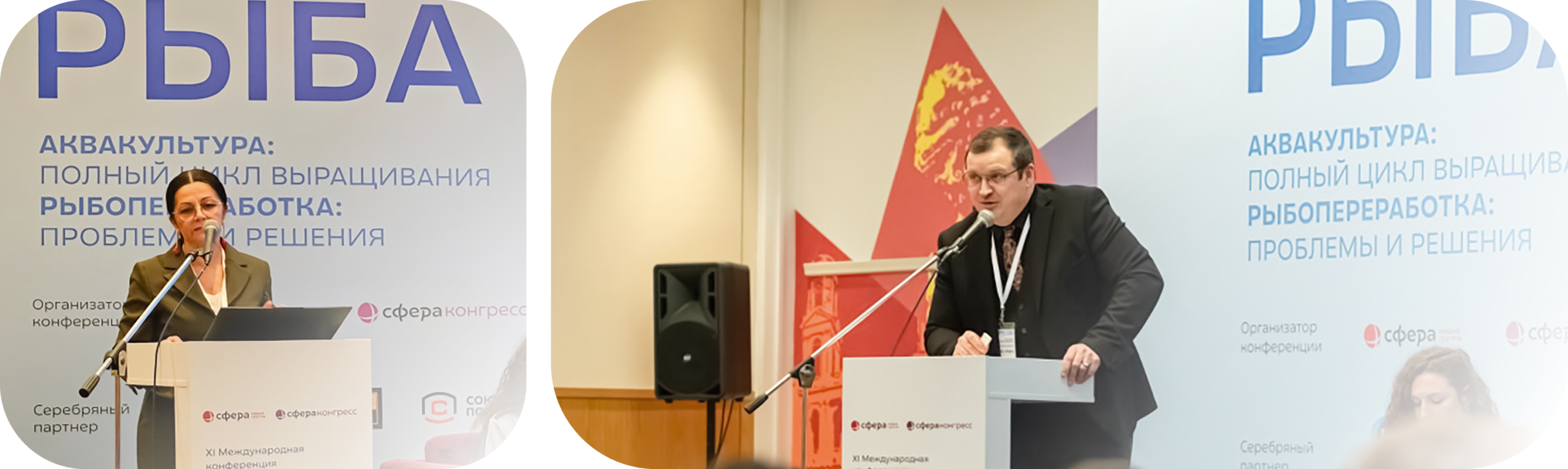
The current development of the fishing industry is determined by several key factors: the growth in aquaculture production, the introduction of new processing technologies and increased requirements for product safety and shelf life. These issues became the central theme of an industry conference that brought together representatives of the scientific community, manufacturers, technology companies and experts from the fishing industry.
During the conference, the participants discussed the main trends in the sector’s development – modernization of aquaculture farms, improvement of feed formulations, introduction of high-tech processing equipment, and development of modern packaging solutions that extend the shelf life of fish products.

Economic trends and development of aquaculture
One of the key topics of discussion was the economic dynamics of the fishing industry. Experts note that the global fish and seafood market continues to grow steadily, with aquaculture products accounting for an increasingly significant share.
The development of the industry is largely connected to the introduction of modern fish farming technologies, including recirculating aquaculture systems (RAS). Such solutions significantly improve production efficiency, reduce the impact of external factors, and ensure consistent product quality.
Special attention is also paid to feed production issues. Manufacturers are actively working to create balanced feed formulations that combine high nutritional value, good digestibility, and the use of sustainable protein sources. Modern feed solutions not only contribute to increased farm productivity, but also improve the quality of the final product.
Modern fish processing technologies
A separate section of the conference was devoted to technological solutions for processing fish and seafood. Specialists presented modern production lines and equipment that enable the automation of key production stages, from primary processing of raw materials to the release of finished products.
According to experts, the introduction of modern technological lines contributes to increased productivity, reduced raw material losses and optimized production processes. In addition, the integration of quality control systems that ensure product compliance with international food safety standards is becoming an important element.
Alongside new technologies, traditional processing methods such as smoking, salting and preserving remain relevant. Modern production solutions allow traditional recipes to be combined with innovative technologies, ensuring consistent quality and extending product shelf life.
Packaging and shelf life extension
Packaging technologies play a special role in the context of growing competition and expanding exports. Modern barrier materials, vacuum packaging, and modified atmosphere packaging significantly extend the shelf life of fish products and preserve their organoleptic properties.
At the same time, packaging serves not only a protective function, but also a marketing one. Manufacturers are increasingly using solutions that provide a high level of product protection, consumer convenience and attractive appearance.
Product safety and quality control
Ensuring food safety remains an important area of development for the industry. The conference participants emphasized the importance of risk management systems, including HACCP, TACCP and VACCP, which enable control over all stages of the production chain, from raw materials to finished products.
The comprehensive implementation of those systems contributes to improving product safety, enhancing traceability, and strengthening trust among consumers and trading partners.
Industry development prospects
Experts note that the further development of the fishing industry will be connected to the integration of innovative technologies, the digitization of production processes, and the implementation of sustainable solutions at all stages of the production chain. The combination of scientific developments, modern equipment, and effective management practices will enable companies in the industry to increase their competitiveness and ensure sustainable growth in the long term.
Source: www.sfera.fm